

Cloning is often framed as medical progress, but the deeper question is who funds it, who profits from it, and how biotech capital shapes the future of life, research, and governance.
Science is usually introduced to the public as a story of discovery.
A breakthrough. A controversy. A leap in medicine. A debate about ethics.
That framing is not wrong, but it is incomplete.
Science does not arrive in public life as science alone. It arrives through institutions, grants, venture capital, state priorities, regulatory pathways, philanthropic networks, media framing, and corporate ownership. By the time the public hears that a new biotechnology could transform medicine, a deeper process has already been underway. Someone has funded the research. Someone has decided which applications matter. Someone has built the legal and commercial architecture around it. Someone has already begun thinking about scale, control, patents, and market capture.
That is the deeper story of cloning.
If earlier pieces in this series examined cloning through the language of therapeutic promise and structural governance, this article asks a more practical question: Who funds the future of life, and what does that funding quietly build?
Because once cloning is placed inside the political economy of biotechnology, it stops looking like a neutral scientific frontier. It starts to look like a strategic zone where medicine, profit, governance, and power begin to merge.
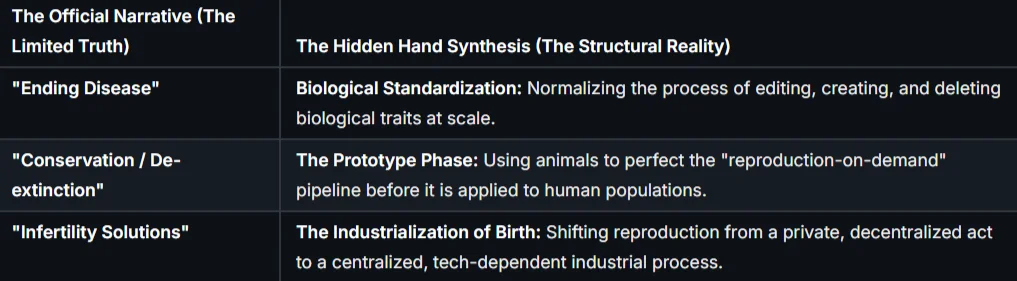
The Myth of Pure Research
Modern societies like to imagine science as a clean realm of discovery, insulated from money and politics. The ideal picture is familiar. Researchers pursue truth. Peer review checks the work. Regulators oversee safety. Markets eventually translate useful discoveries into products. The system may not be perfect, but the public is encouraged to believe its core logic is objective.
In reality, research is shaped long before results appear in a journal.
Funding determines what gets studied and what does not. It determines which methods are considered scalable, which diseases attract attention, which technologies are pushed toward commercialization, and which ethical concerns are treated as barriers instead of warning signs. It can accelerate some fields into public urgency while leaving others underdeveloped and invisible.
Cloning is no exception.
From embryonic stem cell debates to regenerative medicine initiatives, from reproductive restrictions to cellular engineering platforms, cloning-related science has always existed inside a network of institutional choices. The question is not whether money influences the field. Of course it does. The real question is what kind of future the funding structure prefers.
This is where structural literacy becomes essential. The issue is not simply whether a technology is good or bad. The issue is how incentives, ownership, governance, and public narrative shape what that technology becomes in practice.
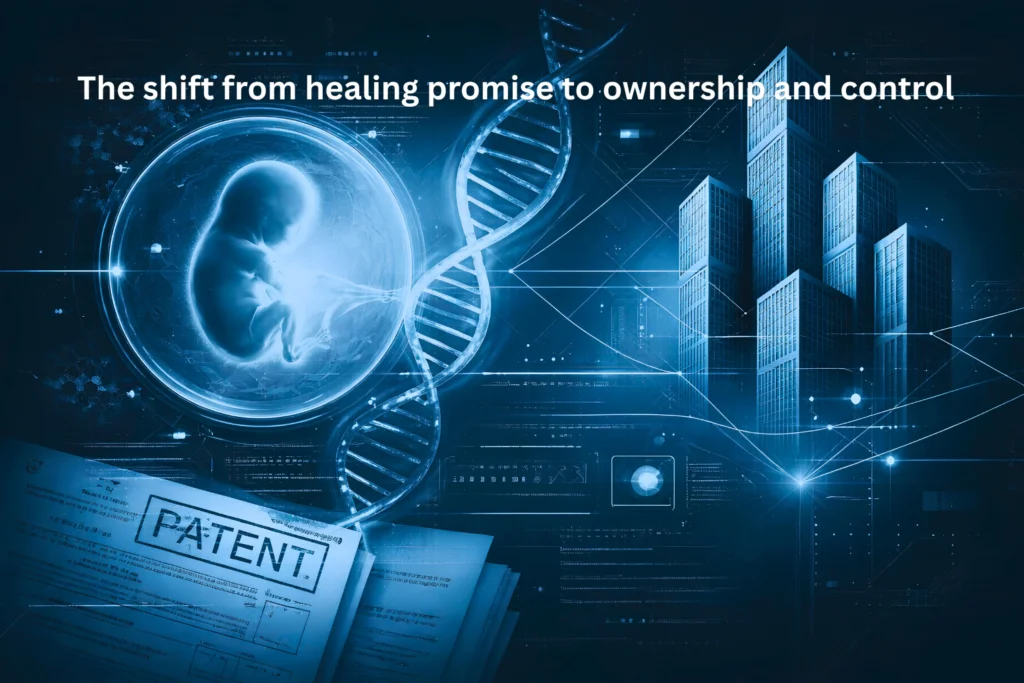
Public Risk, Private Capture
One of the most important patterns in biotechnology is the partnership between public risk and private reward.
Early scientific research is often publicly funded, directly through government grants, or indirectly through universities, research hospitals, tax incentives, and subsidized infrastructure. Public institutions absorb uncertainty. They finance long timelines. They support basic science that may not yet be profitable. They help create the technical foundation for entire industries.
Then, once a field becomes commercially viable, private firms move in to consolidate ownership.
This is not unique to cloning, but cloning makes the pattern unusually visible because the stakes are so high. When the subject is life itself, control over the platform matters more than control over any single product. A company does not only want a therapy. It wants the method, the patent position, the data, the licensing regime, the manufacturing pipeline, and the regulatory moat that keeps competitors out.
That is how the frontier of healing can become an infrastructure of dependency.
The public is often told that commercialization is simply the price of innovation. Without private incentives, we are told, breakthroughs would remain stuck in laboratories. There is some truth in that argument. But it hides a deeper asymmetry. If taxpayers support the scientific groundwork, patients provide the need, and public institutions legitimize the field, why does ownership become increasingly concentrated in private hands once the science matures?
That question becomes even sharper when the technology concerns reproduction, tissue engineering, cellular manipulation, or biological identity.
When Biology Becomes Intellectual Property
Cloning sits near the center of a larger historical shift. Biology is no longer just observed. It is increasingly designed, extracted, stored, patented, and monetized.
This is not simply a philosophical problem. It is a legal and economic one.
When a living process becomes part of a proprietary platform, access changes. What once belonged to the domain of nature, kinship, or ordinary human inheritance begins to move into systems of contractual control. Laboratories, firms, and patent holders gain power not only over therapies but over the conditions under which those therapies can exist, circulate, and be priced.
This is where the language of medicine starts to blur into the language of enclosure.
A patient may hear about hope. An investor may hear about addressable markets. A regulator may hear about safety and compliance. A research university may hear about grants and prestige. A national security planner may hear about strategic capability. Different actors hear different things, but they are increasingly looking at the same biological terrain.
That terrain is life as platform.
Once that logic takes hold, cloning is no longer only about whether an embryo should be used, or whether tissues can be replicated, or whether a therapeutic technique is ethically justified. It is also about who owns the technical means of biological repetition itself.

Why Funding Is Never Just Funding
Money does more than finance experiments. It creates direction.
A grant portfolio can produce a scientific map. Venture funding can create a market horizon. Philanthropic sponsorship can shape moral legitimacy. Defense or security interest can redefine a field as strategically important. Crisis conditions can suddenly accelerate entire classes of research that would have moved more slowly under ordinary conditions.
Funding, in other words, is not merely support. It is selection.
It tells scientists where the future is supposed to be.
In the case of cloning and adjacent biotechnologies, this means the public should pay close attention not only to what researchers say they are building, but to the institutions underwriting the work. What kinds of applications attract sustained investment? Which capabilities receive extraordinary protection, urgency, or policy support? Which ethical objections are treated as serious, and which are managed as public relations problems? Which technologies are framed as humanitarian necessity, and which are quietly developed through military, intelligence, pharmaceutical, or transnational commercial channels?
These questions do not prove malicious intent. They do something more important. They reveal structure.
The Security Shadow Behind Biotechnology
Not every biotechnology program is military. Not every public health initiative is covert. Not every research partnership is suspect.
But it would be naive to pretend that advanced biological technologies develop in a vacuum untouched by state security interests.
Modern states have always taken interest in any field that promises strategic advantage. Communications, aerospace, computing, surveillance, energy, and medicine all show the same broad pattern. When a technology has the potential to shape national power, institutional attention follows.
Biotechnology now belongs in that category.
Why would it not? A state concerned with resilience, population health, defense readiness, supply chain continuity, pandemic response, food systems, and strategic competition would naturally view biotech as a major domain of power. Once that happens, research agendas begin to overlap with state priorities in ways the public rarely sees clearly. The language remains therapeutic and humanitarian, but the surrounding logic broadens.
Capabilities built for treatment can also serve monitoring. Platforms built for prevention can also serve control. Systems built for resilience can also centralize authority.
This is one reason the language of biosecurity matters so much. Biosecurity does not only describe biological threats. It increasingly describes a governance model in which life, risk, compliance, and institutional management begin to fuse.

The Media Function: Selling the Moral Entry Point
No major biomedical field reaches scale without narrative management.
The public does not naturally sort through stem cell ethics, somatic cell nuclear transfer, patent law, tissue engineering, reproductive politics, and biocapital. These topics are too technical, too fragmented, and too easily abstracted. So a simplified public story is usually created.
The story is built around suffering and rescue.
A child with a disease. A family waiting for treatment. A breakthrough that could save lives. A scientist portrayed as courageous, compassionate, and future-facing. Critics are often acknowledged, but they are subtly repositioned as obstacles to relief, innovation, or progress.
Again, some of this is fair. Real people do hope for real cures. But the emotional framing performs another function. It narrows what the public is invited to ask.
The public is encouraged to ask whether the science works, whether it is safe, and whether it is ethical enough to proceed.
The public is not encouraged to ask who will own the resulting infrastructure, who shaped the priorities, who benefits if biological dependence increases, or how emergency narratives can be used to normalize long-term systems of management.
That silence is often where the real architecture lives.
The Quiet Logic of Standardization
Cloning also reveals another institutional desire, one less dramatic but equally important: the desire for standardization.
Modern systems work best when what they manage becomes predictable. Standard forms are easier to regulate, insure, reproduce, distribute, and govern. Variability creates friction. Biological life is full of variability.
This is why the industrial and administrative imagination is so drawn to platforms that reduce uncertainty. Whether the subject is seed stock, livestock, tissue cultures, cellular lines, reproductive technologies, or patient-specific engineering, the same attraction appears again and again. Life becomes more legible when it becomes more standardized. It becomes more valuable to institutions when it becomes more reproducible.
Cloning is one expression of this tendency.
It does not erase biological complexity, but it points toward a world in which replication is no longer simply natural inheritance. It becomes a managed process, governed through technical expertise and institutional authority.
That matters because standardization is never purely technical. It changes power relationships. It shifts biological agency away from households, local communities, and informal human life, and toward laboratories, regulatory systems, and capital-intensive organizations.
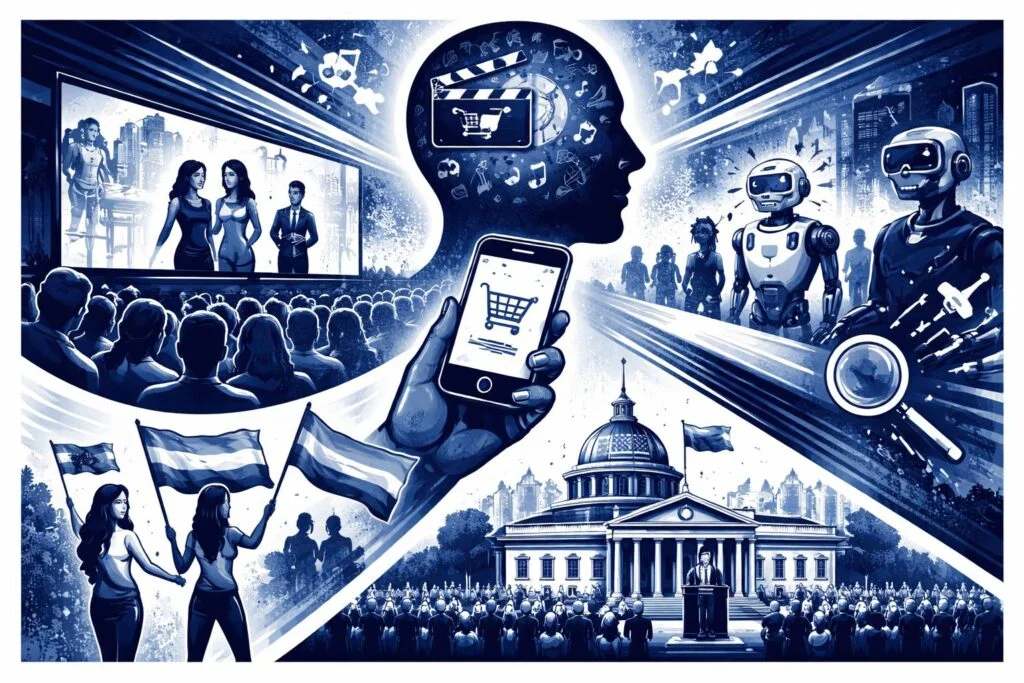
The Cultural Preparation for Managed Life
There is also a softer layer to all this, and it should be handled carefully.
Societies are often prepared for major shifts before they can describe them directly. Culture rehearses what politics later normalizes. Commerce teaches habits of imagination before law or science formalize them. Ideas once considered morally remote become familiar through entertainment, symbolism, branding, consumer ritual, and technological convenience.
That does not mean every cultural artifact is evidence of a coordinated plan. It means culture can make once-unthinkable arrangements feel ordinary.
When infancy, design, replication, customization, and commodified identity become recurring motifs in public life, a deeper transition may be underway. The line between what is born and what is produced begins to blur. The line between nurture and management starts to soften. The line between life as gift and life as platform becomes easier to cross.
Handled badly, this theme becomes sensational. Handled carefully, it becomes structural. The point is not to force bizarre conclusions. The point is to ask how a civilization gradually acclimates itself to greater technical and commercial intimacy with life itself.
The Real Question Behind Suspicious Funding
People often use the phrase suspicious funding too loosely. That can weaken serious work.
The better question is not whether a funding source sounds sinister. The better question is whether the funding pattern reveals a mismatch between public rhetoric and structural outcome.
If a field is sold as decentralized healing but develops toward concentrated ownership, that matters.
If a technology is presented as patient liberation but deepens institutional dependence, that matters.
If public urgency is used to expand biological infrastructure faster than democratic oversight can keep up, that matters.
If regulatory language emphasizes safety while commercial design emphasizes lock-in, that matters.
A structural analysis does not need to prove a secret cabal. It only needs to show that money, policy, and capability are converging toward an outcome the public was never clearly invited to debate.
That is often how modern power works. Not by announcing its final intention, but by advancing through layers of reasonable language while building systems whose cumulative effect is much larger than their public justification.

When the Future of Life Becomes a Managed Market
At a certain point, the issue is no longer cloning by itself.
The issue becomes whether society is entering a new regime in which the biological foundations of human life are progressively integrated into markets, databases, security frameworks, and proprietary technical systems. In that world, reproduction, repair, identity, fertility, disease management, tissue access, and even the definition of biological normality become increasingly mediated by institutions.
Cloning matters because it helped open that door.
It was one of the early technologies that forced the public to confront a radical possibility. Life could be copied, manipulated, and redirected under controlled conditions. Once that threshold was crossed, even partially, the moral imagination changed. Biology was no longer just inherited fate. It became an arena of intervention.
And once life becomes an arena of intervention, it also becomes an arena of administration.
Conclusion
The public story of cloning has always been emotionally compelling. Healing. Hope. Regeneration. Rescue. Those are powerful truths, and they should not be mocked.
But a structural reading asks a different question.
Not only what the science can do, but what kind of system it helps build.
When we ask who funds cloning and related biotech fields, we are really asking who gets to define the future of life. Who decides what counts as urgent. Who owns the methods. Who sets the terms of access. Who translates suffering into market opportunity. Who uses crisis to accelerate infrastructure. Who benefits when biology becomes more standardized, more patentable, more traceable, and more governable.
The future of life may still be spoken about in the language of care. But the architecture forming around it increasingly speaks the language of power.

Tier 5 Syntheses
The following syntheses are interpretive conclusions built from the documented tiers beneath them. They are not standalone proof, but structured inferences drawn from recurring patterns across funding, law, governance, and commercialization.
-
Cloning is best understood not only as a medical technique, but as an early gateway technology in the wider enclosure of biology.
Its public legitimacy came through therapeutic promise, but its deeper significance lies in helping normalize institutional control over the replication and management of living systems. -
Biotech funding does not merely support discovery. It quietly selects the future.
Research capital acts as a steering mechanism. It determines which biological capabilities become urgent, scalable, investable, and politically protected. -
The most important question is often not whether a biotechnology works, but who owns the platform once it does.
Public debate tends to focus on ethics at the point of invention. Structural power accumulates later, at the point of ownership, licensing, regulation, and distribution. -
The merger of public funding, private capture, and security logic creates a model in which life can be governed through systems that still appear humanitarian on the surface.
This does not require a single conspiracy. It only requires institutional convergence. -
What is emerging is not simply a market for therapies, but a political economy of managed life.
In that economy, the body is increasingly visible as data, tissue, risk, capital, and infrastructure. -
The real danger is not that the public will be told a total lie. The real danger is that the public will be told a partial truth that conceals the scale of the system being built.
Healing may be real. Innovation may be real. But if those truths become the moral cover for deeper forms of dependency and control, then the therapeutic narrative is functioning as an entry point, not a full explanation.
Method note: This article distinguishes between documented evidence, structural interpretation, and Tier 5 synthesis. It does not argue from sensation. It argues from patterns of funding, governance, ownership, and institutional convergence.
External Links Used in Article
Additional External Links
These support the spine and can be added in the body or references section:
- Therapeutic cloning: promises and issues – PMC
- Embryos, Cloning, Stem Cells, and the Promise of Reprogramming – NCBI Bookshelf
- Biotechnology, Democracy, and the Politics of Cloning
- Biosecurity: The Socio-Politics of Invasive Species and Infectious Diseases – Routledge
- Anticipating risks, governance needs, and public perceptions of de-extinction – Taylor & Francis
- One Biosecurity: a unified concept to integrate human, animal, plant, and environmental health – PMC
Reference List
- National Human Genome Research Institute. Cloning Fact Sheet.
- Kfoury, Charlotte. Therapeutic cloning: promises and issues. McGill Journal of Medicine.
- Varmus, Harold. Embryos, Cloning, Stem Cells, and the Promise of Reprogramming. NCBI Bookshelf.
- Albert, Craig, Amado Baez, and Joshua Rutland. Human security as biosecurity. Politics and the Life Sciences.
- Best, Steven, and Douglas Kellner. Biotechnology, Democracy, and the Politics of Cloning.
- Dobson, Andrew, Kezia Barker, and Sarah L. Taylor, eds. Biosecurity: The Socio-Politics of Invasive Species and Infectious Diseases. Routledge.
- Valdez, Rene X., Jennifer Kuzma, Christopher L. Cummings, and M. Nils Peterson. Anticipating risks, governance needs, and public perceptions of de-extinction. Journal of Responsible Innovation.
- Hulme, Philip E. One Biosecurity: a unified concept to integrate human, animal, plant, and environmental health. Emerging Topics in Life Sciences.
Related Posts Block
Related Posts
-
Part 1: What Cloning Was Supposed to Do: The Therapeutic Promise Behind Modern Biotech
How cloning entered public consciousness through the language of healing, regeneration, and medical hope. -
Part 2: The Governance of Life: Cloning, Biosecurity, and the Politics of Population
How cloning fits into a broader governance model focused on bodies, risk, surveillance, and population management. -
Part 4: From Exception to Infrastructure: How Crisis Normalizes Biological Control
A closer look at how emergency logic expands institutional authority over health, movement, and compliance. -
Part 5: The Endgame Question: Population Management, Replacement Logic, and the Quiet Politics of the Future
A disciplined structural synthesis on how biotech, biosecurity, and governance may converge into a new politics of life.