
What begins as therapy can become infrastructure. What begins as protection can become governance.
When cloning first entered public consciousness, it arrived carrying the language of hope. It was presented as a breakthrough for regenerative medicine, infertility treatment, tissue repair, and disease research. The public was told that these new techniques could help scientists understand illness, develop therapies, and perhaps one day replace damaged organs or cells with healthy ones grown from a patient’s own biological material.
That promise was not fictional. It was real, at least in part. Many scientists did and still do believe these tools could relieve suffering. Many patients heard in cloning the possibility of repair, second chances, and life restored where disease had taken too much. The therapeutic promise was powerful precisely because it was not a fabrication. It was a truth.
But it was also a limited truth.
The deeper story of cloning is not only about what it might heal. It is about what kind of world becomes possible when institutions acquire new powers over the making, storage, classification, and replication of life itself. Once cloning is viewed through that wider lens, it begins to look less like a narrow medical innovation and more like one part of a much larger system, a system concerned with managing biological risk, standardizing bodies, and governing populations.
This is where cloning meets biosecurity.
What Biosecurity Really Means
“The boundary between research and creation is not a line, but a thickening fog of legal and biological data.”
In ordinary conversation, biosecurity sounds practical and benign. It suggests protection against disease, safety in laboratories, safeguards around dangerous pathogens, and responsible oversight of biological research. At that level, biosecurity appears to be nothing more than a defensive response to modern risk.
But biosecurity is also a political framework. It is a way of organizing power around life itself.
Under a biosecurity model, the body is no longer simply personal. It becomes a site of administration. Health becomes a matter of surveillance, regulation, prediction, and intervention. Biological processes that were once treated as intimate, private, or natural begin to move into the domain of systems, databases, protocols, and emergency powers.
This shift matters because it changes the role of institutions. They are no longer just caring for the sick. They are increasingly positioned to monitor the healthy, anticipate future threats, regulate movement, shape reproduction, and define what kinds of biological life count as safe, normal, or desirable.
In that context, cloning is not an isolated technology. It is part of a larger institutional ambition to make life more legible, more controllable, and more technically manageable.
From Therapeutic Tool to Governance Infrastructure
The public-facing case for cloning focused on medicine. Stem cells could be used to study disease. Cloned tissues might reduce transplant rejection. Cellular replication could help researchers understand how development works and why things go wrong. These arguments gave cloning moral legitimacy.
But once those capabilities are built, they do not remain confined to the clinic.
A system that can isolate, preserve, replicate, and manipulate living material at scale is also a system that can classify bodies in new ways. It can separate valuable traits from undesirable ones. It can link biological identity to databases, intellectual property regimes, health systems, and state policy. It can transform life from something encountered into something managed.
This is the point where the politics begin.
The question is no longer just whether cloning can help heal a patient. The question becomes: who controls the tools, who writes the rules, who owns the biological outputs, and what larger governance model is being built around these capacities?
Modern biotechnology often arrives wrapped in therapeutic language because therapy is the most publicly acceptable entry point. It offers urgency, compassion, and moral cover. But technologies justified by healing can easily become infrastructures of sorting, monitoring, and standardization once they are absorbed into larger political and economic systems.
Biotechnology, Democracy, and the Politics of Cloning
Why Population Becomes the Real Subject
Most people think of cloning in individual terms. A patient. A disease. A treatment. A lab. A moral debate. But power rarely thinks only in terms of individuals. Institutions think in aggregates. They think in trends, risk pools, demographics, capacity planning, and long-range stability.
That is why the politics of cloning cannot be separated from the politics of population.
Population, in modern governance, is not just a number of people living in a place. It is an object of management. It is something measured, forecasted, optimized, and sometimes quietly reshaped. Birth rates, fertility patterns, life expectancy, disability burdens, genetic disease prevalence, dependency ratios, and public health outcomes all become subjects of policy.
Once that framework is in place, technologies that touch reproduction or biological design begin to take on a different meaning. They are no longer only therapeutic. They become strategic.
Cloning matters in this environment because it belongs to a family of technologies that reduce dependence on the unpredictability of natural processes. It points toward a world in which reproduction, inheritance, and even biological continuity become less spontaneous and more engineered. Even where full human cloning remains prohibited or taboo, the scientific and institutional logic behind cloning pushes society toward a deeper principle: life can be designed, stored, selected, and reproduced under technical management.
That principle has enormous implications.
The Language of Protection
One of the most powerful features of modern governance is that it rarely presents control as control. It presents control as protection.
This is especially true in matters of biology. Policies are justified in the name of safety. Technologies are introduced in the name of prevention. Expanded oversight appears under the sign of care. The public is asked to accept greater institutional reach because the threat is framed as exceptional, complex, and urgent.
Biosecurity thrives in this atmosphere because it speaks the language of necessity. It tells the public that biological life must now be governed more closely because the risks are too great, the systems too interconnected, and the consequences too severe.
There is truth in that argument. Biological risks are real. Pandemics are real. Laboratory failures are real. Disease surveillance can save lives. But here again, we confront a limited truth.
The same logic that justifies emergency intervention can also normalize permanent management. What begins as temporary oversight can become standing infrastructure. What starts as crisis response can become a durable administrative model. Once biological governance systems are in place, they rarely remain limited to their original purpose.
This is why moments of public fear matter so much. They accelerate permissions. They lower resistance. They train populations to accept deeper layers of institutional mediation between themselves and their own bodies.
Cloning and the Desire to Eliminate Uncertainty
At its core, cloning expresses a particular civilizational desire: the desire to reduce uncertainty in the realm of life.
Natural life is messy. Reproduction is unpredictable. Disease emerges unevenly. Bodies vary. Traits pass through generations in ways no planner can fully control. For institutions built on standardization, predictability, and risk management, this unpredictability is a permanent challenge.
Cloning does not solve all of that, but it points in the direction of a more governable biology. It imagines life not as inheritance alone, but as process. Not as mystery, but as platform. Not as something received, but as something reproduced under controlled conditions.
That shift is philosophically profound. It moves society from a world in which life is primarily lived and encountered to one in which life is increasingly engineered, curated, and administered.
Even if the most dramatic applications never become normal, the mindset already matters. Once institutions learn to think of life as editable infrastructure, the political imagination changes with it. Biological existence starts to look less like an irreducible human condition and more like a technical field open to management.
The Economic Layer Beneath the Ethical One
The ethical debates around cloning often focus on dignity, personhood, embryos, and the boundaries of human intervention. Those questions matter. But they are only part of the picture.
Beneath the ethical debate sits an economic structure.
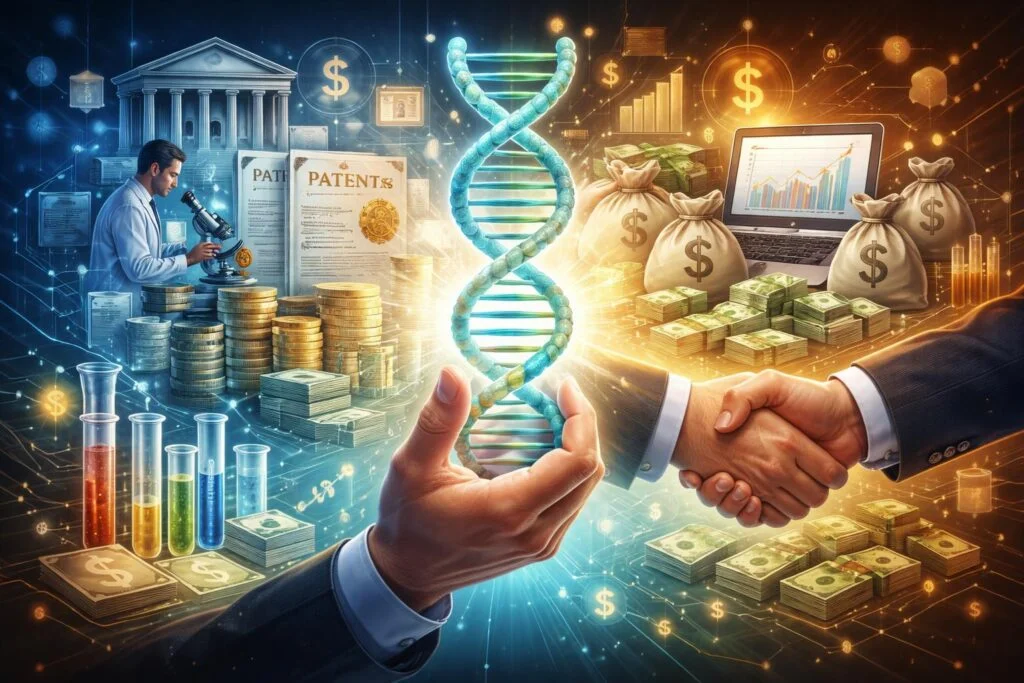
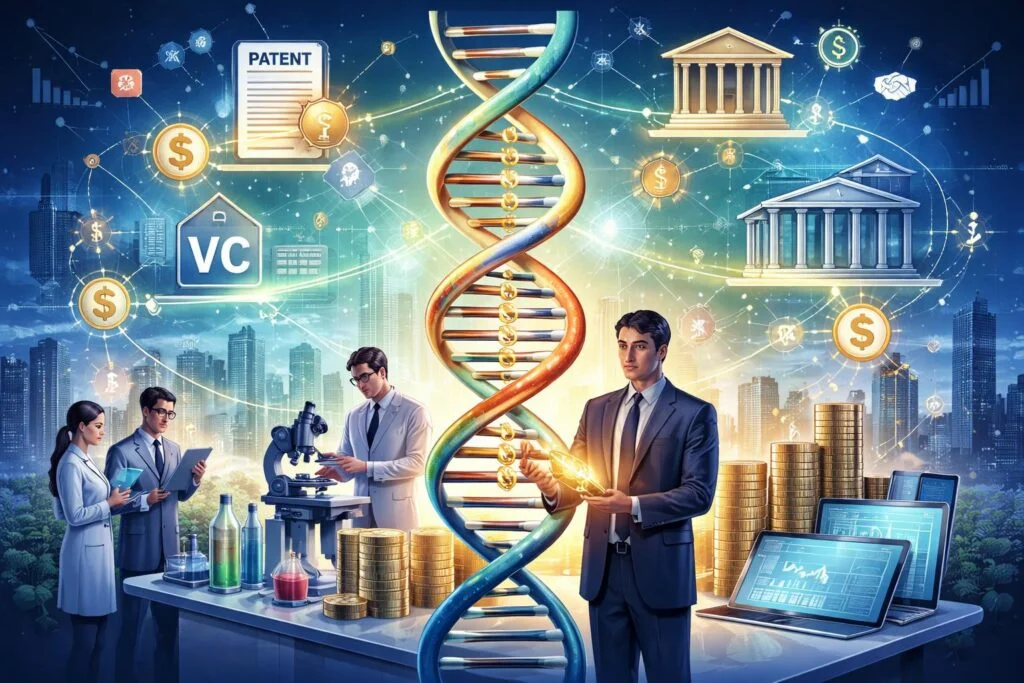
Biotechnology is not merely a scientific enterprise. It is a commercial one. It depends on patents, licensing, venture funding, public-private partnerships, research grants, state contracts, and the steady conversion of scientific capability into institutional power and market value. In that system, life is not only studied. It is monetized.
This changes the stakes. If living material can be patented, if cell lines can be owned, if biological processes can be standardized into proprietary platforms, then the future of cloning is inseparable from the future of biological ownership.
Under those conditions, the question is not simply whether a technology works. The question is what kinds of dependency it creates. Does it centralize power? Does it make access to life more conditional? Does it move essential biological functions away from families, communities, and ordinary human relationships and into systems controlled by laboratories, corporations, and state-aligned institutions?
These are not fringe questions. They are structural ones.

Embryos, Cloning, Stem Cells, and the Promise of Reprogramming – NCBI Bookshelf
The Pandemic Era and the Expansion of Biological Governance
Recent history made something visible that had been building for years. Under conditions of public health emergency, governments and institutions claimed broad authority over movement, work, social participation, medical decision-making, and access to public space. New forms of monitoring and compliance became thinkable almost overnight.
Whatever one’s view of specific policies, the period revealed a larger pattern. Biological risk can rapidly become the organizing principle of public life.
That matters here because it shows how quickly the management of bodies can move from the margins to the center of governance. Once this occurs, technologies associated with biological knowledge and intervention take on new political significance. They are no longer just tools of medicine. They become instruments within a broader architecture of administration.
Cloning belongs to that horizon, not because every cloning lab is secretly running a political program, but because the capabilities it develops fit neatly into a world already moving toward tighter biological oversight. The science and the governance logic reinforce one another. One expands what is technically possible. The other expands what is politically acceptable.
Boundary Drift & Synthesis
If we step back, a clearer picture emerges.
Cloning was introduced to the public as a therapeutic project. That was the moral gateway. It framed the science in terms of compassion, repair, and medical progress. Much of that framing was sincere. But structurally, the significance of cloning extends far beyond treatment.
It helps normalize the idea that life can be broken into usable components. It strengthens the institutional habit of treating biological existence as something that can be stored, classified, replicated, and optimized. It expands the technical foundation for a world in which reproduction, identity, and health are increasingly mediated by systems of expertise and control.
In this light, the therapeutic promise is not a lie, but it is a limited truth.
The deeper function of cloning is that it participates in the construction of a new governance model, one in which bodies are more visible to institutions, more dependent on technical systems, and more vulnerable to economic and political enclosure. The language of healing opens the door. The infrastructure that follows reaches much further.
This does not mean every scientist is acting in bad faith. It does not mean every breakthrough conceals a secret plan. It means that technologies develop inside systems of power, and those systems have interests that exceed the stated aims of research.
The real question, then, is not whether cloning can heal. It is what kind of political order is being built around the capacity to engineer life.
Conclusion
Every age reveals its priorities by what it seeks to control. Earlier empires fought over land, labor, and trade routes. Modern systems built themselves around industry, finance, and information. The emerging struggle is over life itself, its codes, its reproduction, its ownership, and its governance.
Cloning matters because it belongs to that transition.
What was sold as a medical frontier may prove to be part of something larger: the gradual absorption of biology into the machinery of administration. If that is true, then the most important debate is not simply whether cloning is ethical in the abstract. It is whether societies are willing to let the management of life pass quietly from the human sphere into institutional systems that claim to protect us while steadily expanding their reach.
That is the politics of population in the age of biotech. Not merely who lives and dies, but who decides how life itself will be made, governed, and understood.
References
-
Kfoury, Charlotte. Therapeutic cloning: promises and issues. McGill Journal of Medicine via PMC.
-
Varmus, Harold. Embryos, Cloning, Stem Cells, and the Promise of Reprogramming. The Art and Politics of Science. NCBI Bookshelf.
-
Albert, Craig, Amado Baez, and Joshua Rutland. Human security as biosecurity. Politics and the Life Sciences.
-
Dobson, Andrew, Kezia Barker, and Sarah L. Taylor, eds. Biosecurity: The Socio-Politics of Invasive Species and Infectious Diseases. Routledge.
-
Auchincloss, Hugh, and Joseph V. Bonventre. Transplanting cloned cells into therapeutic promise. Nature Biotechnology.
-
Valdez, Rene X., Jennifer Kuzma, Christopher L. Cummings, and M. Nils Peterson. Anticipating risks, governance needs, and public perceptions of de-extinction. Journal of Responsible Innovation.
-
Best, Steven, and Douglas Kellner. Biotechnology, Democracy, and the Politics of Cloning.